
The Radium Girls: The Glowing Workers and the Price of Progress
You face risks every day on the job, just as the Radium Girls did, exchanging your time and energy for a paycheck, but you also expect a safe working environment and fair treatment in return. However, for hundreds of young women painting watch dials with luminous radium paint in the early 20th century, the consequences were catastrophic. As you consider the implications of corporate negligence and the fight for labor law reforms, you'll encounter haunting questions about the price of progress – questions that still demand answers today, and whose modern relevance may shock you.
Key Takeaways
- Radium Girls were young women employed to paint watch dials with luminous radium paint, unaware of the health risks, for high wages.
- They suffered severe illnesses, including bone cancer and necrosis, due to corporate negligence and lack of protective gear while handling radium.
- The exploitation of Radium Girls highlighted the cost of industrial advancement, where profits prioritized over employee health led to tragic outcomes.
- Radium Girls' activism contributed to improved labor laws, stricter safety regulations, and the establishment of OSHA in the 1970s.
History of Radium Use

Discovering radium in 1898, Marie Curie released a frenzy of interest in the element, which was quickly touted as a medical wonder and beauty enhancer, enchanting the public's imagination and sparking widespread use in consumer products.

You witness factories capitalizing on radium's glowing properties, employing hundreds of young women to paint watch dials with luminous radium paint.

Initially, workers are attracted by high wages and the allure of working with a 'miracle' substance. However, the lack of safety regulations and awareness of radium's dangers leads to severe health crises, including bone cancer and necrosis.

This exploitation ultimately sparks advocacy efforts, highlighting the need for workplace safety reforms.
As you explore the history of radium use, you uncover a complex narrative of miracles, exploitation, and the fight for workers' health and safety.
Corporate Negligence Unleashed
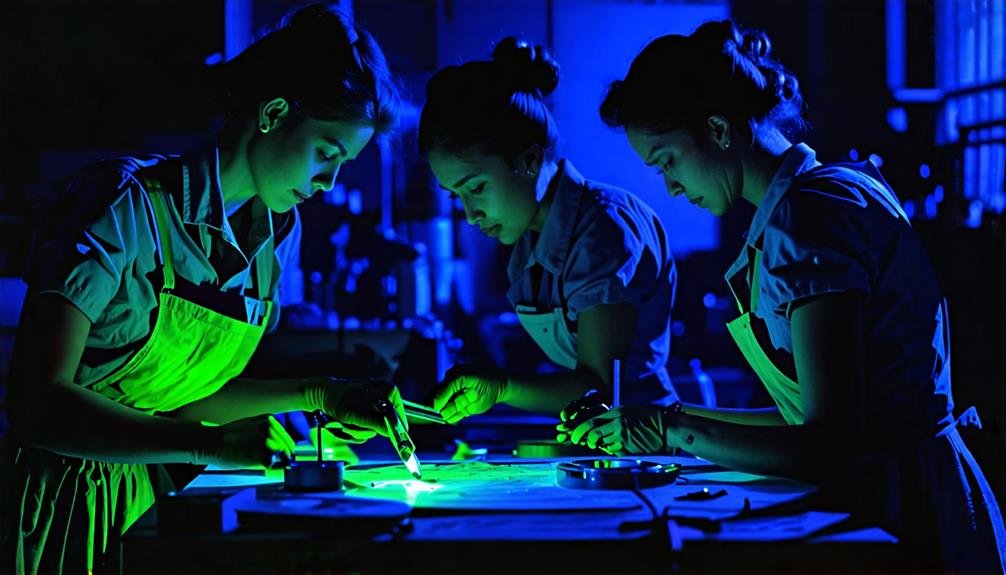
As you explore the darker side of the radium industry, you'll find that corporations like the U.S. Radium Corporation prioritized profits over people, exposing thousands of women to toxic levels of radium without proper protective measures. This corporate negligence led to widespread health crises, including bone cancer and necrosis, and sparked the first all-women class action lawsuit in U.S. history.

Here are just a few ways corporate negligence unfolded:
- Ignoring health risks: Companies dismissed health complaints and suppressed information about radium exposure.
- Lack of protective measures: Workers weren't provided with proper gear to handle radium, leading to severe illnesses.
- Systemic exploitation: Companies exploited female laborers, prioritizing production over worker safety in radium-dial factories.
This negligence ultimately led to changes in workplace safety regulations, highlighting the need for accountability in industrial settings.

Price of Industrial Progress
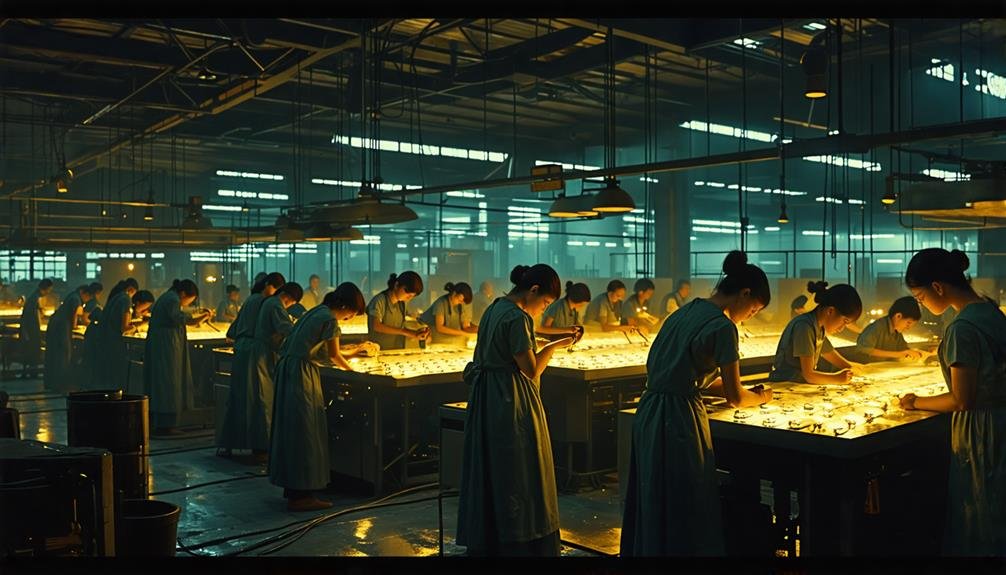
The true cost of industrial advancement is starkly illustrated by the tragic fate of the Radium Girls, whose exploitation and suffering sparked a revolution in labor laws and safety regulations.
Behind the glowing watch faces and supposedly beneficial element was a dark reality of corporate negligence, where profits were prioritized over worker safety.
The Radium Girls, oblivious to the risks, fell victim to severe health hazards such as bone cancer and jaw necrosis.
The price of industrial progress was paid in full by these young women, whose tragic outcomes catalyzed significant changes in labor laws and safety regulations.
As you consider the Radium Girls' story, you're reminded that the pursuit of economic gain must never come at the cost of workers' rights and lives.

The Radium Girls' Legacy

As you explore the Radium Girls' legacy, you'll see how their brave fight for workers' rights paved the way for vital changes in labor laws and workplace safety regulations.
You're about to witness the lasting impact of their struggles, from raising awareness about occupational hazards to inspiring a movement for accountability in industries handling toxic materials.
Fighting for Workers' Rights
Fuelled by their suffering and struggles, Radium Girls played a pivotal role in advocating for workers' rights and pioneering landmark legislation that changed the landscape of workplace safety.
You'll find that their determination led to significant improvements in labor laws and corporate accountability.
Here are three key ways they fought for workers' rights:
- Pioneering lawsuits: They spearheaded the first all-women class action lawsuit against their employers, highlighting the urgent need for corporate accountability in workplace safety.
- Raising public awareness: Their legal battles resulted in significant public awareness of occupational hazards, leading to stricter safety standards.
- Improved labor laws: Their activism contributed to the establishment of improved labor laws, including more stringent workplace safety regulations and compensation for injured workers, leaving an indelible legacy.
Impact on Labor Laws
Building on their groundbreaking work in advocating for workers' rights, you'll see that the Radium Girls' impact on labor laws created a lasting legacy that continues to protect workers today.
Their legal battles against industrial negligence led to significant changes in labor laws, resulting in stricter workplace safety regulations. The formation of OSHA in the 1970s was a direct result of their efforts.
You'll note that their struggle raised public awareness about toxic substances and workers' rights, influencing future labor movements. The landmark case led to compensation payments, paving the way for occupational health cases and workers' compensation laws.
The Radium Girls' legacy continues to inspire advocacy for worker safety and health regulations, emphasizing the importance of protecting employees from hazardous materials.
Enduring Social Change
The Radium Girls' courageous fight for justice sparked a lasting impact on American society, leaving behind a legacy that continues to drive social change and inspire advocacy for workers' rights today. You can see the ripple effects of their struggle in the following key areas:
- Advancements in Labor Laws: The Radium Girls' landmark class action lawsuit led to significant changes in labor laws, paving the way for the establishment of the Occupational Safety and Health Administration (OSHA) in the 1970s.
- Increased Awareness of Workplace Safety: Their story highlights the importance of prioritizing worker safety and health regulations, sparking ongoing discussions about women's rights in the workforce.
- Corporate Accountability: The Radium Girls' legacy serves as a powerful reminder of the need for ethical responsibility from corporations towards their employees, particularly in the face of industrial advancements.
Fighting for Workers' Rights

You’re about to explore how the Radium Girls’ courageous fight for justice sparked a significant movement for workers’ rights in the US. The Radium Girls, a group of female factory workers who faced severe health consequences due to their exposure to radium paint, became symbols of resilience as they took on powerful corporations in their quest for accountability. Their struggle not only highlighted the need for safer working conditions but also inspired broader discussions about labor rights and gender equality during a time when women’s voices were often marginalized. This movement can be viewed through a feminist perspective on baseball songs, reflecting how cultural narratives can intersect with social justice issues, showcasing the strength and determination of women who have historically been overlooked in both labor and leisure contexts.
As you examine this period, you'll see how their advocacy efforts led to the reform of labor laws, ultimately shielding future workers from hazardous conditions.
You'll also discover how these pioneering women laid the groundwork for regulatory agencies like the Occupational Safety and Health Administration (OSHA), ensuring employers could no longer prioritize profits over workers' safety.
Workers' Rights Movement Emerges
Facing radium exposure's devastating health consequences, fighting for workers' rights becomes a critical necessity for the Radium Girls, who spearhead a movement that exposes corporate negligence and sparks landmark changes in labor laws.
You're part of this journey, witnessing the emergence of a workers' rights movement that's markedly influenced by the Radium Girls' plight.

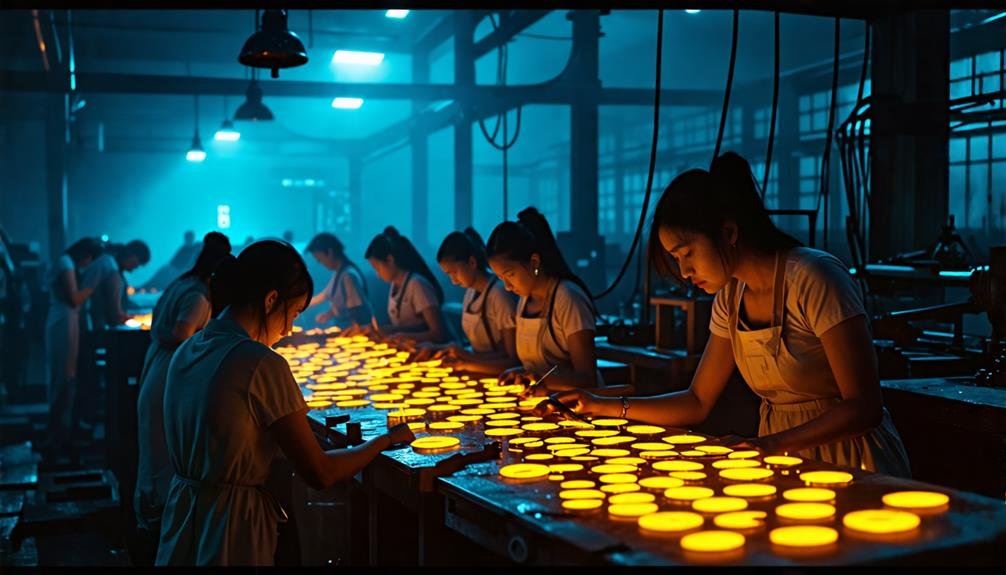
Years after initial exposure, workers who handled radium paint in factories began to suffer from severe and often debilitating health issues that would have a profound impact on their lives.
You see, radium's effects can take years to manifest, leading many women to believe they'd escaped unscathed.
But the consequences of prolonged exposure were dire, with over 90% of workers developing severe health problems.
Negligence on the part of corporations, prioritizing production over safety, left these women facing illnesses like radium jaw, anemia, and cancer.
Landmark lawsuits would eventually raise awareness about occupational hazards, but for many, it was too late.
You can't help but wonder how different their lives would've been if safety measures had been put in place to prevent such devastating health consequences.
Quest for Justice Continues

While their health struggles were debilitating, the Radium Girls' determination to fight for justice led them to pursue landmark lawsuits that would expose corporate negligence and bring about much-needed change in workplace safety regulations.
You'll be astonished by the challenges they faced and the significant impact of their efforts. Here are three key outcomes:
- First all-women class action lawsuit: Their lawsuit against the U.S. Radium Corporation raised public awareness about occupational health hazards and paved the way for safer workplace regulations.
- Improved labor laws and safety standards: The Radium Girls' advocacy efforts influenced labor laws and safety standards, protecting future workers from industrial exploitation.
- Accountability and compensation: Despite corporate resistance, many victims and their families received compensation, bringing some measure of justice to those affected.
The Radium Girls' quest for justice continues to inspire accountability in corporate practices today.


