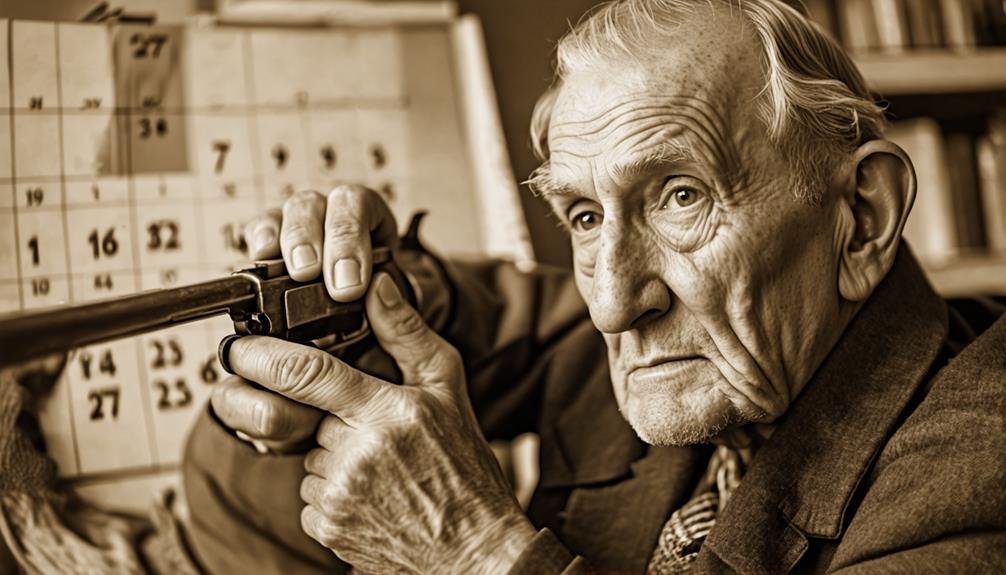
The Last Surviving Civil War Veteran Died in 1956
You might think that 1956 is too recent for any direct connections to the Civil War, but you'd be surprised. That year marked the passing of Albert Woolson, the last surviving veteran of that monumental conflict. His death closed a chapter in American history that had stretched across nearly a century. While Woolson's role as a drummer boy didn't involve combat, his longevity made him a living link to a pivotal era. As you consider the significance of his passing, you'll find that it raises intriguing questions about memory, legacy, and the ways we connect with our nation's past.
Key Takeaways
- Albert Woolson, the last surviving Civil War veteran, died on August 2, 1956, at the age of 106.
- Woolson enlisted as a drummer boy at 14 in the Union Army but did not see combat.
- His death marked the end of the Civil War generation and the Grand Army of the Republic.
- Woolson's passing signified the loss of firsthand accounts from Civil War veterans.
Albert Woolson's Remarkable Life

Though he enlisted as a mere drummer boy at 14, Albert Woolson's life would span over a century and make him the last living link to the Civil War era.
Born in 1850, Woolson served in the Union Army without seeing combat. He married twice and raised eight children to adulthood.

As the last surviving Civil War veteran, Woolson received immense recognition. On his 104th birthday, he was showered with over 8,000 cards from well-wishers.

His death on August 2, 1956, marked the end of an era. President Eisenhower paid tribute to Woolson, and over 1,500 people attended his funeral.
He was laid to rest with full military honors at Park Hill Cemetery in Duluth, Minnesota.
Woolson's remarkable life bridged two centuries and symbolized the passing of the Civil War generation.

Legacy of the Last Veteran
Albert Woolson's death in 1956 marked the end of an era, closing the final chapter on living Civil War veterans and solidifying his place as a symbol of American history.
As the last surviving Union Army veteran, Woolson's legacy extended far beyond his service as a drummer boy. He became a national symbol of remembrance, highlighting the contributions of younger soldiers in the Civil War.

The public's interest in preserving this history was evident in the overwhelming response to his 104th birthday, with over 8,000 cards and letters received.
Woolson's funeral, attended by significant figures and over 1,500 people, saw him buried with full military honors in Duluth, Minnesota.
His enduring legacy is commemorated by the GAR memorial monument 'Last Survivor' at Gettysburg, serving as a lasting tribute to Civil War veterans' sacrifices.
Civil War's Final Chapter
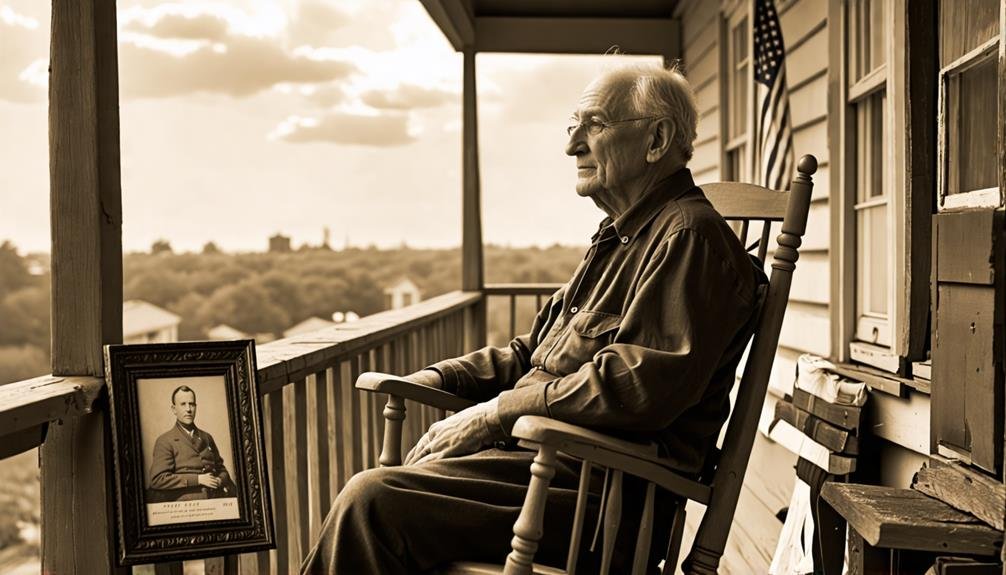
With Woolson's passing, the final chapter of the Civil War closed, marking the end of an era that had shaped American history for nearly a century.
Albert Woolson, the last surviving veteran of the Union Army, died at the age of 106 in 1956. As a drummer boy who enlisted at 14, he served without seeing combat but became a living link to the Civil War. His death marked the end of the Grand Army of the Republic, a veterans' organization formed in 1866.

Woolson's funeral drew over 1,500 attendees, and he received national recognition, including a tribute from President Eisenhower.
His passing signified:
- The loss of firsthand accounts from Civil War veterans
- The end of direct connections to a pivotal period in American history
- A shift in how the nation remembers and commemorates the Civil War
Conclusion
You've witnessed the closing of a significant chapter in American history.
With Albert Woolson's passing, you've lost the last living link to the Civil War.
It's now up to you to keep the stories and lessons alive.
Remember, you're the custodians of this legacy.
Don't let it fade into obscurity.
Honor Woolson and his fellow veterans by preserving their memories and ensuring future generations understand the war's impact on our nation.


