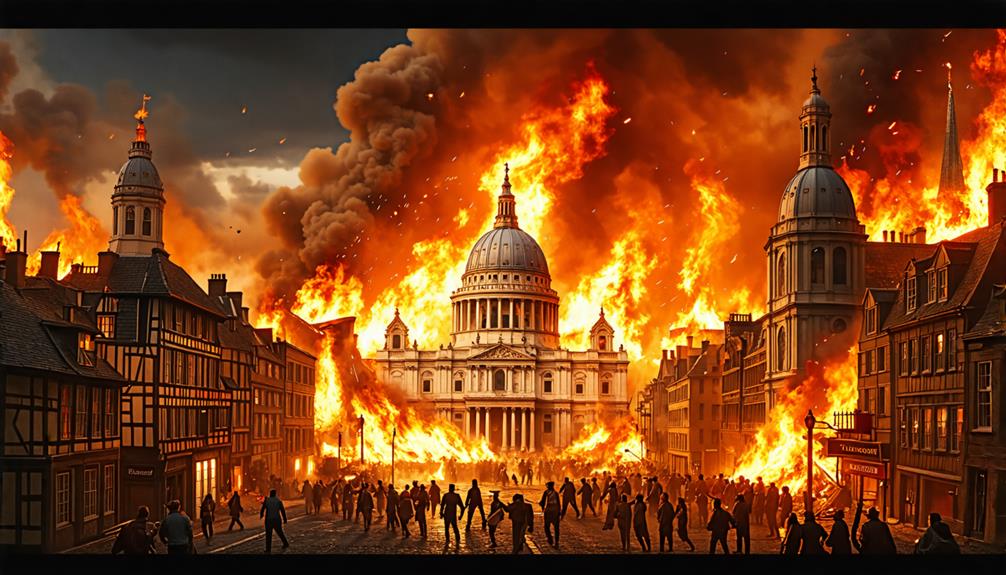
The Great Fire of London: The Inferno That Remade a City
You're about to witness the transformation of a city, one that rose from the ashes of a devastating inferno. The Great Fire of London, which ravaged the city in 1666, was more than just a disaster – it was a catalyst for change. You'll see how a small bakery on Pudding Lane became the unlikely source of a fire that would destroy iconic landmarks and leave thousands homeless. But that's not the end of the story. As the flames were extinguished, a new London began to emerge, one that would be shaped by the lessons of the inferno.
Key Takeaways
- The Great Fire of London in 1666 destroyed 13,200 buildings, 87 churches, and iconic landmarks, leaving 70,000 residents homeless.
- The fire started in a bakery on Pudding Lane, spreading rapidly due to strong easterly winds and the largely timber-frame construction of the city.
- The disaster led to significant changes in urban planning, fire safety regulations, and the establishment of organized fire brigades.
- Reconstruction efforts, led by Sir Christopher Wren, transformed the city, resulting in the construction of St. Paul's Cathedral and over 13,200 new buildings.
London Before the Great Fire
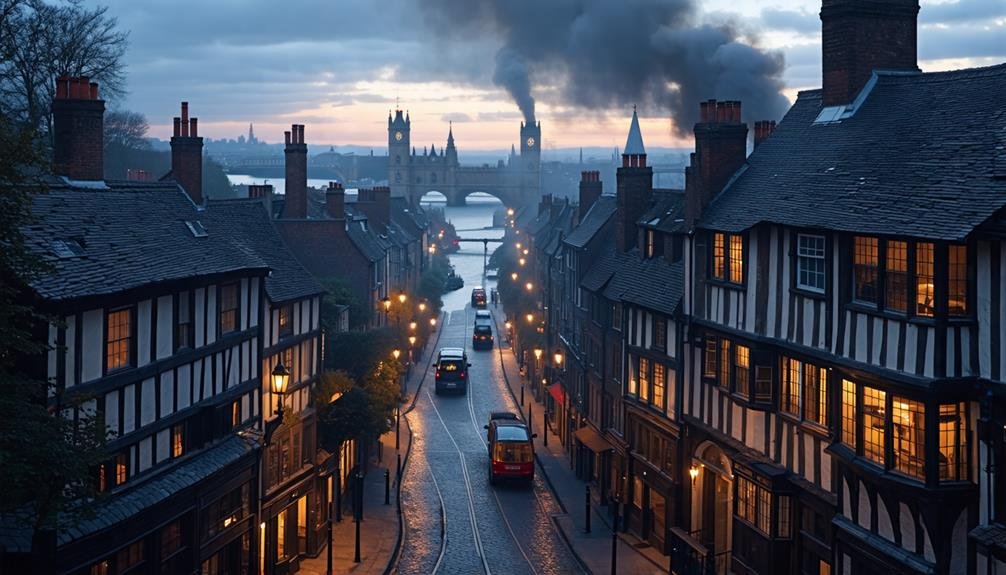
As you walk through 1666 London, you find yourself surrounded by a sea of timber-frame buildings, their thatched roofs a reflection of the city's largely medieval architecture, and a recipe for disaster.
The city's 350,000 residents are packed tightly into these wooden houses, which are often separated by mere inches. Combustible materials, like dry kindling, litter the streets.

You can't help but notice the lack of fire safety regulations, which has led to a culture of complacency towards fire hazards. Despite the frequent small fires, Londoners seem indifferent to the risks.

As you navigate the narrow alleys, you can’t shake the feeling that this tinderbox of a city is just waiting for a spark to set it ablaze, and you wonder when, not if, a devastating fire will strike. The air is thick with an unsettling tension, and every creak of wood or flicker of light seems to echo the city’s precarious state. It reminds you of the Boston brinks job overview you read about, where chaos erupted in the unlikeliest of places, leaving a lasting scar on the community. Each step forward only fuels your imagination about what might happen if the city were to truly ignite, and you can’t help but feel that its fate hangs by a thread.
Sparks of Destruction and Chaos

You're about to witness the sparks that ignited one of the most devastating disasters in London's history.
As you explore the causes of the inferno, you'll see how a combination of factors, including strong easterly winds and largely wooden buildings, created a perfect storm of chaos and mass destruction.

You'll discover how human error, outdated firefighting methods, and other elements came together to fuel the Great Fire of London.
Causes of the Inferno
The combination of human error and unfavorable environmental conditions created a perfect storm that sparked the Great Fire of London.

You see, a bakery on Pudding Lane was the starting point of this devastating event.
Several factors contributed to the inferno's rapid spread:
- A prolonged drought had made the city's timber-frame structures and thatched roofs highly flammable.
- A strong east wind propelled flames towards central areas of the city, making it difficult to contain the fire.
These elements combined to create a disaster that would change the face of London forever.
The Great Fire of London was a catastrophe that would leave a lasting impact on the city.
Chaos and Mass Destruction
Within mere days, the Great Fire of London had released a trail of destruction that would leave the city in ruins, with thousands of residents scrambling to escape the inferno's deadly path.

You're witnessing the chaos unfold as the fire spreads rapidly, fueled by strong easterly winds and the city's densely packed wooden structures. The people of London are in a state of panic, trying to flee the inferno that's destroying everything in its path.
The official death toll is surprisingly low, but modern estimates suggest that hundreds, if not thousands, may have perished.
As the fire is finally brought under control, the rebuilding process seems intimidating, with an estimated 70,000 residents left homeless.
The Great Fire has left an indelible mark on London, forever changing its landscape.
Inferno Along the Thames
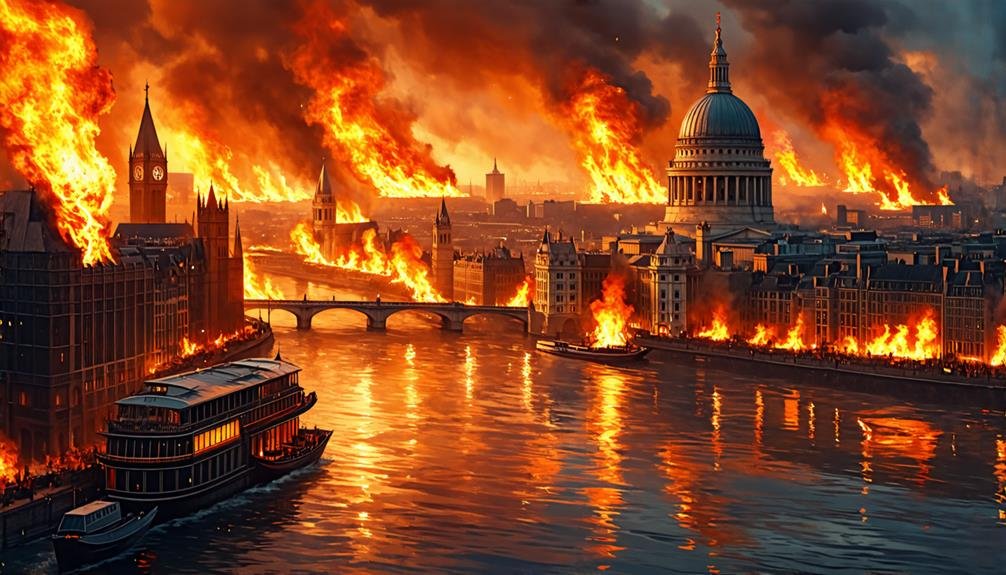
As flames erupted from Thomas Farriner’s bakery on Pudding Lane, a disaster of unimaginable proportions began to unfold along the Thames waterfront. You see the Great Fire of London spreading rapidly, fueled by strong easterly winds that carry embers and ignite additional structures along the river. The fire raged on, consuming everything in its path, and it’s up to you to imagine the chaos. Amidst the relentless flames and desperate cries for help, the city was plunged into turmoil, as citizens scrambled to salvage what little they could from their homes. In the midst of this chaos, gossip spread of a great cheese riot in England, igniting fervor and confusion among the fire-stricken populace. While the inferno threatened to consume all, the bakers and traders who had once thrived on Pudding Lane now faced an unexpected calamity of both fire and fervent unrest.
The fire destroys about 436 acres of the city, leaving around 70,000 people homeless.
The easterly wind makes it impossible for the fire brigade to create effective firebreaks.
The fire clears the way for new houses and buildings, an opportunity that will be seized by renowned architects like Christopher Wren in the years to come.
Destruction of Historic Landmarks
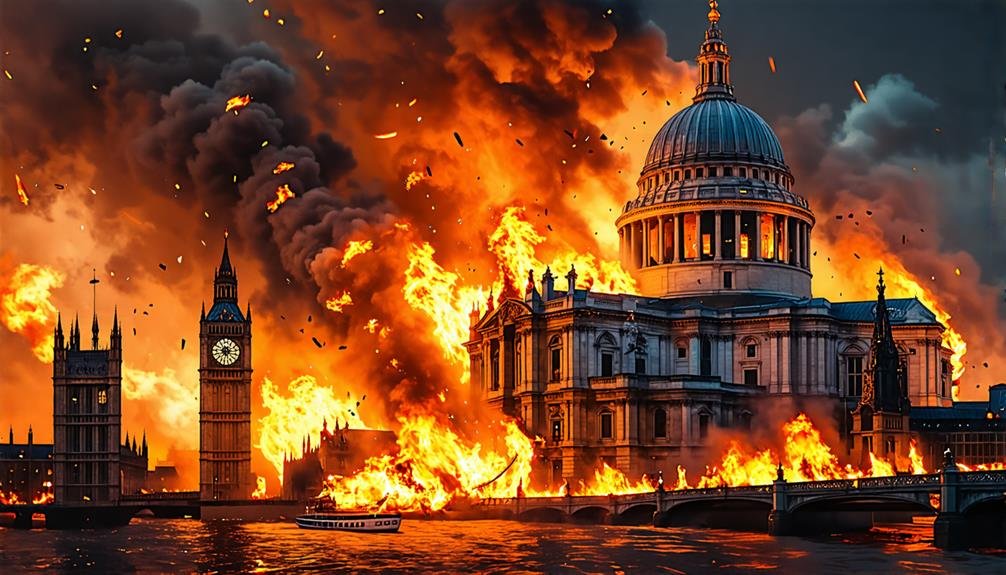
You're about to witness the devastating impact of the Great Fire of London on the city's historic landmarks.
As the fire raged on, it gutted iconic structures like the Royal Exchange and reduced approximately 87 parish churches to ashes, including the majestic St. Paul's Cathedral.
You'll discover the staggering scale of destruction that prompted a massive reconstruction effort, forever changing the face of London.
Lost Historic Buildings
The Great Fire of London in 1666 destroyed a staggering number of historic buildings, including nearly 87 parish churches and iconic landmarks like the Royal Exchange and St. Paul's Cathedral. As you walk through the rebuilt city, you're likely to wonder what these lost historic buildings looked like.
Some notable losses include:
- The historic Cheapside, a wealthy street known for its businesses, which was ravaged by the fire.
- Major commercial and civic structures that were consumed, forcing a major overhaul of the urban landscape.
King Charles II responded to the devastation by envisioning a new city with wider streets and stronger fire codes. He ultimately employed architects like Christopher Wren for the rebuilding of London, starting with the beautiful, new St. Paul's Cathedral.
Burned Iconic Structures
Destroying nearly 87 parish churches, including the iconic St. Paul's Cathedral, and major commercial landmarks like the Royal Exchange, the Great Fire of London left an indelible mark on the city's architectural heritage. You can imagine the devastating impact of losing such iconic structures.

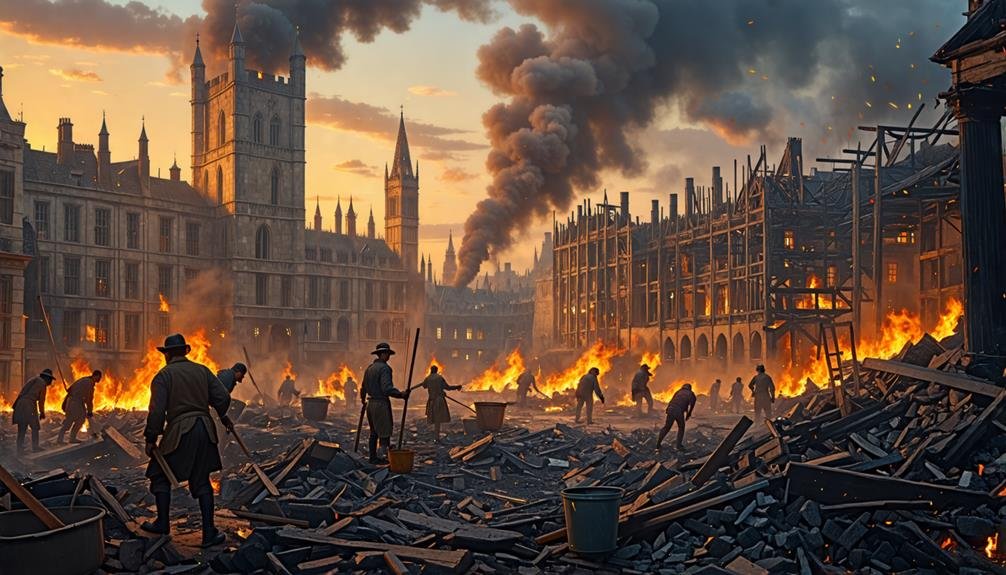
Following the devastating blaze, a swift and coordinated response was mobilized, as King Charles II took charge of relief efforts, establishing a fund to support the thousands of people left homeless.
You see the city coming together to rebuild and recover. Key initiatives included:
- The establishment of a relief fund to support the homeless and initiate clean-up efforts
- The appointment of six commissioners to oversee the systematic reconstruction of the city
Under the guidance of Sir Christopher Wren, the city's reconstruction efforts transformed London's architectural landscape.
The response and recovery efforts paved the way for a more resilient and sustainable city, shaped by the lessons of the Great Fire of London.
Rebuilding a New London
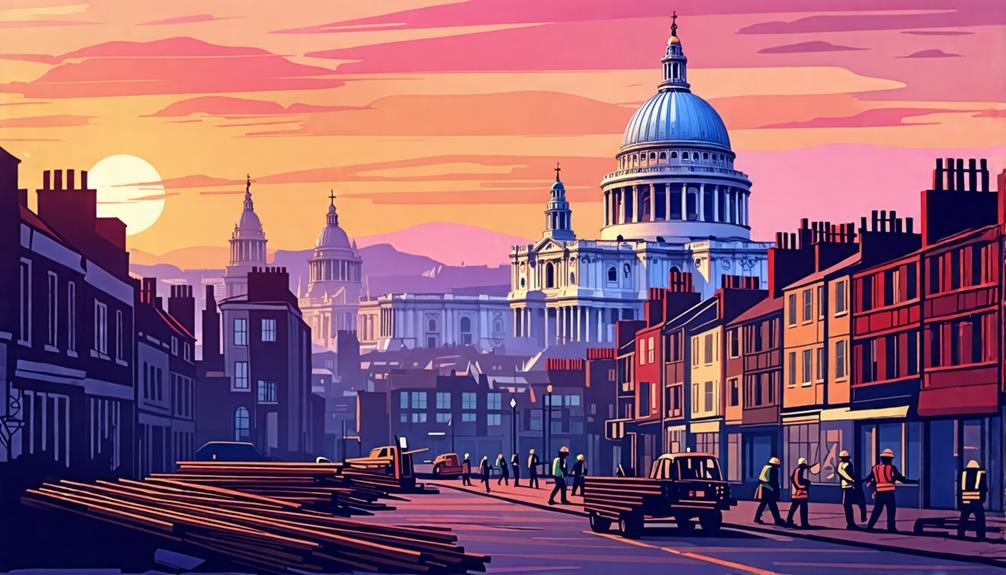
Over 13,200 houses and 87 churches had been reduced to ashes, but from these ruins, a new London would rise, shaped by the vision of its leaders and the lessons of the past. You're about to witness the massive rebuilding efforts that transformed the city. The Rebuilding Act of 1667 mandated the use of brick or stone for new constructions, ensuring fire safety and changing the face of London. Sir Christopher Wren played a key role in designing the new city, including the iconic St. Paul's Cathedral.
| Year | Event | Impact |
|---|---|---|
| 1666 | Great Fire of London | Destruction of 13,200 houses and 87 churches |
| 1667 | Rebuilding Act | Mandated use of brick or stone for new constructions |
| 1675 | Construction of St. Paul's Cathedral began | Iconic landmark and symbol of rebuilt London |
| 1711 | Completion of St. Paul's Cathedral | Culmination of rebuilding efforts, improved fire safety |
Impact on Architecture and Society
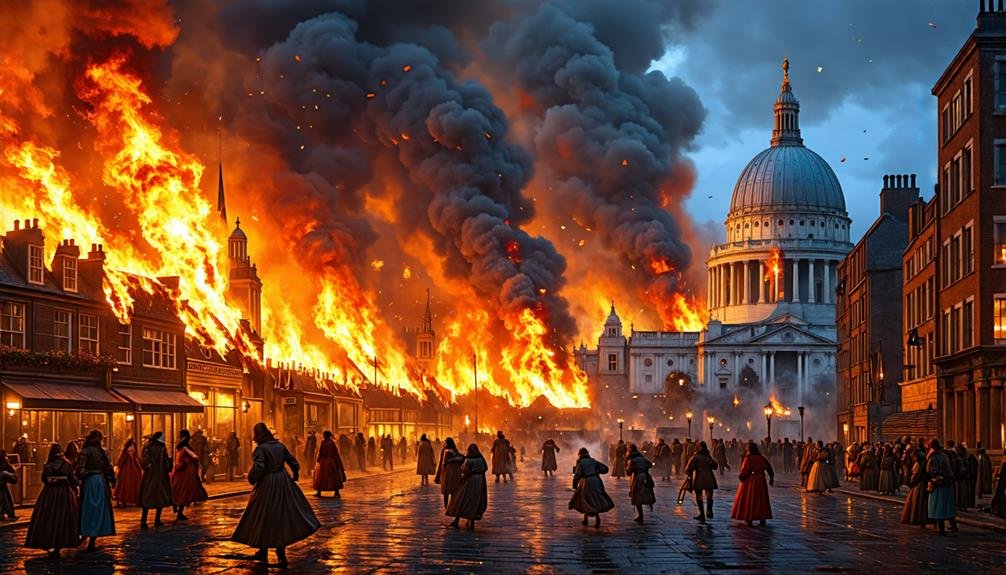
As the city rose from its ashes, the Great Fire of London sparked a profound transformation in its architectural landscape, forever changing the way Londoners lived, worked, and interacted with their surroundings.
You'll notice that the fire led to significant changes in building design and construction. Here are a few key developments that emerged from the ashes:
- The London Building Act of 1666 mandated the use of fire-resistant materials like brick and stone for new constructions.
- Sir Christopher Wren's designs for St. Paul's Cathedral and 52 other churches introduced new styles and building techniques.
These changes have had a lasting impact on the city's architecture and society.
Legacy of the Great Fire
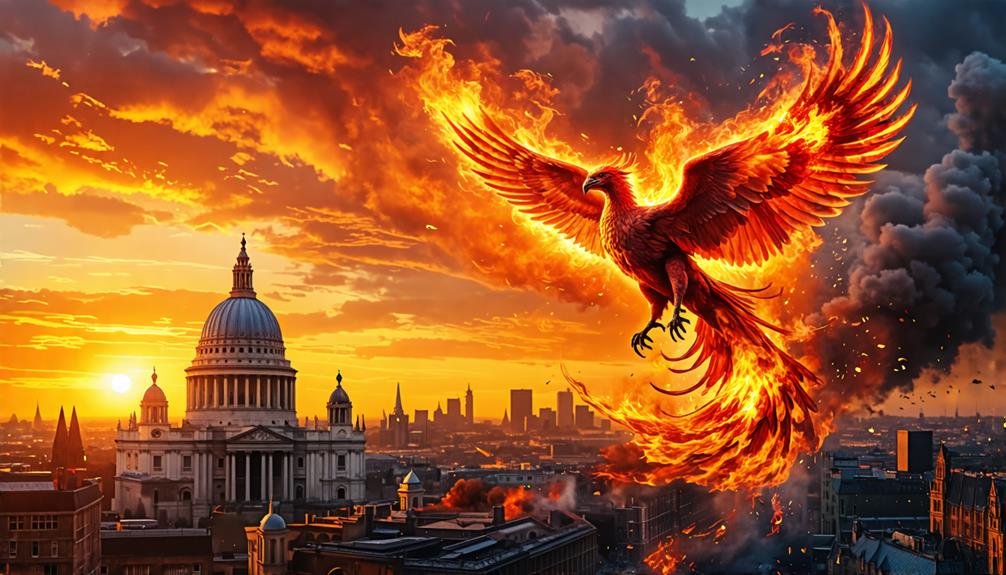
The legacy of the Great Fire of London is still palpable today, shaping the city's architecture, infrastructure, and emergency response systems in lasting ways.
You can see it in the 13,200 new buildings constructed after the disaster, many of which were designed by the renowned Sir Christopher Wren. His iconic St. Paul's Cathedral, completed in 1711, is a reflection of the city's resilience.
The Great Fire also led to the introduction of the London Building Act, which mandated fire-resistant materials and wider streets for better firefighting access.
Additionally, it spurred the creation of organized fire brigades and improved fire safety practices, fundamentally changing the way cities approach emergency response.
These innovations continue to influence urban planning and fire safety today.


